

The Life Cycle of Moths Explained
Posted: Jul 1, 1999
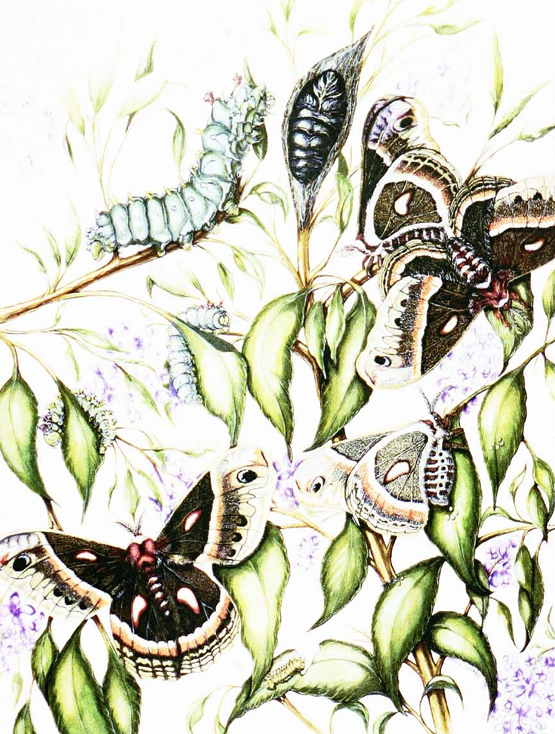
Hi, it’s BugSignal! I’m writing this after spending half the night outside with my camera, hoping to spot a luna moth. I didn’t get one this time, but I did see a Cecropia, which is almost as cool. I’ve been obsessed with moths since I was little, and every summer I end up with a notebook full of sketches and photos. My favorite thing is watching how they change. Seriously, it’s like nature’s own special effects.
Moths go through four main stages: egg, larva (that’s the caterpillar), pupa (the cocoon), and adult. Each part is wild in its own way. I remember finding a bunch of Cecropia eggs on a hickory leaf and checking on them every morning before school. When they finally hatched, I was so excited I almost forgot my lunch. The caterpillars grow so fast you can actually notice the difference from one day to the next. I spent a whole summer watching those eggs, and every day felt like a new episode of my own nature show. Sometimes I’d sketch what I saw, just to keep track of all the changes.
And it’s not just Cecropias. Almost every moth you see outside is living this transformation. If you ever get the chance to watch the whole cycle, do it. It’s way better than anything on TV.
Eggs: Moth moms lay hundreds of eggs, usually stuck to the underside of leaves. Some species go solo, some cluster up. Cecropias like to group. The eggs are tiny but packed with everything the caterpillar needs to get started. After a week or two, the caterpillars hatch and start eating. If you look close, you can see the eggs change color as the caterpillar inside gets ready to break out.
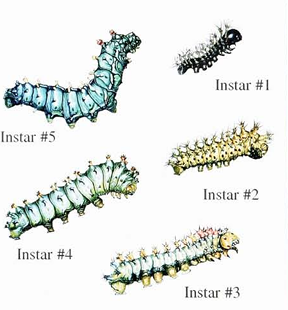
Larva (Caterpillar): This is the eating machine stage. Cecropia caterpillars go through five growth spurts, shedding their skin each time. Early ones are black and spiky, later they get huge and green with blue and orange bumps. They eat leaves like it’s their job. Some caterpillars even mimic twigs or bird droppings to avoid predators. I kept one in a jar once and it ate half a leaf overnight. If you ever find one, watch how it chews. It’s actually kind of hypnotic.
Pupa (Cocoon) & Emergence: This is where things get really interesting. After the caterpillar has eaten as much as it can, it starts searching for a good spot to settle down.
Sometimes it’ll crawl for ages, checking out twigs, leaves, or even the underside of a porch rail. I found one there once and checked on it every day.
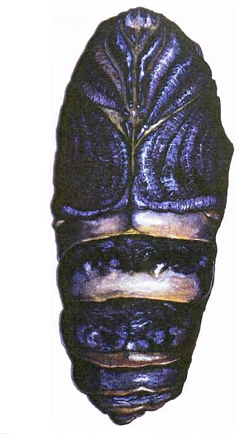
When it’s ready, it anchors itself and starts spinning silk, wrapping itself up until it’s completely hidden. If you watch closely, you can see the caterpillar working its head back and forth, weaving the silk. It’s like watching a tiny construction worker build a fort!
Inside the cocoon, the caterpillar basically turns into goo and reorganizes itself into a moth. I read in an old nature book that the pupa stage can last for weeks, or even months if the moth is waiting out the winter.
Sometimes, if you’re patient and lucky, you might see the cocoon wiggle a little as the moth gets ready to come out. I used to sit outside with a flashlight, hoping to catch that moment.
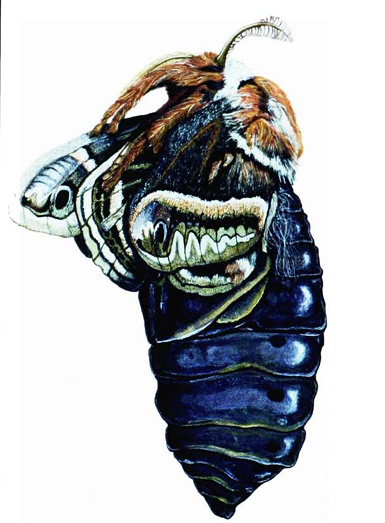
When it’s finally time, the adult moth breaks free from the cocoon.
The first thing it does is pump fluid into its crumpled wings to expand them, almost like blowing up a balloon. The wings start out wrinkled, but slowly stretch and flatten as the moth waits for them to dry.
I saw a Cecropia hatch once and it was amazing. The change from a chunky caterpillar to a beautiful moth is something you have to see to believe.
If you ever find a cocoon, don’t poke it. Just watch and wait. Nature will do the rest, and you’ll get to see one of the coolest reveals in the insect world.
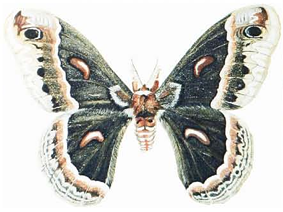
Adult: The grand finale! Cecropia adults are massive, wingspans up to six inches. They don’t eat (no mouthparts), just fly, mate, and lay eggs. Females are bigger for egg-laying, males have feathery antennae to sniff out pheromones. Most moths only live a week or two as adults, so it’s a short but spectacular show. If you see one, check out the antennae. Males’ look like tiny feathers.
Most adult moths are nocturnal, so you might spot them near porch lights or fluttering around at dusk. Cecropias are especially striking because of their size and colors. I once saw a pair on my window screen and it felt like winning the bug lottery. But my absolute favorite is the luna moth. If you ever see one, you’ll know why. They look like something out of a dream, with those pale green wings and long tails.
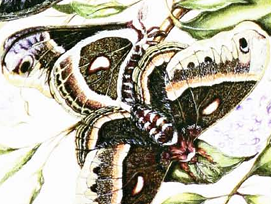
Fun Fact: Moth romance is all about chemical signals. The female Cecropia is the big one (upper left), packed with eggs, while the male (lower right) is smaller but has those wild antennae for tracking her down. If you ever see a pair, watch how the male follows the female. He’s picking up her scent from yards away.
Next time you spot a cocoon or a chunky caterpillar, remember: you’re seeing one of nature’s most epic transformations. If you ever see a Cecropia or any moth in the wild, snap a photo and share it on the imageboard. I’ll be out there all summer, hoping for another luna moth sighting!
Reference: Walter, Mary E. "The life cycle of moths and butterflies." parnassius-apollo.life, 1999.
← Back to Blog